

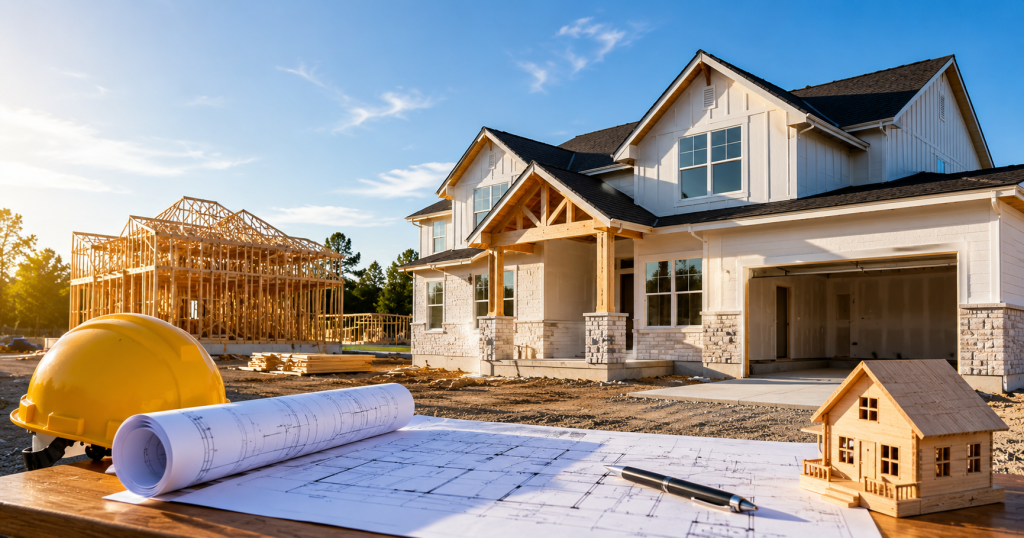
Buying a brand-new home is one of the most exciting decisions you can make. Unlike purchasing an existing property, new construction homes offer modern layouts, energy-efficient systems, and the ability to customize finishes to suit your lifestyle. But the process comes with its own set of rules, timelines, and financial considerations that every homebuyer should understand before signing anything.
Whether you’re a first-time buyer or upgrading to something bigger, knowing what to expect from the new construction home buying process puts you in a far stronger position. This guide walks you through the most important factors — from choosing a builder to understanding warranties.
How to Choose the Right New Construction Home Builder
The builder you choose will shape your entire experience from contract to closing. Not all builders are created equal — some specialize in custom builds, while others offer production homes from pre-designed floor plans. Research online reviews, visit model homes, and ask for references from past buyers before committing. A reputable builder will be transparent about timelines, costs, and what’s included in the base price.
Once you’ve shortlisted builders, compare their standard features versus upgrades. Many new home builders lure buyers with a low base price, only to charge premium rates for things like flooring, cabinetry, or smart-home technology. Understanding exactly what you’re getting — and what costs extra — helps you budget accurately and avoid surprises at the design center.
Understanding New Construction Home Financing and Costs
Financing a new construction home works differently from buying a resale property. Depending on the stage of construction, you may need a construction-to-permanent loan or a standard mortgage if the home is already built. Builders often have preferred lenders who offer incentives such as interest rate buy-downs or closing cost contributions — these can be valuable, but always compare offers from outside lenders too.
Beyond the purchase price, budget for costs that aren’t always obvious upfront. HOA fees, landscaping, window treatments, appliances, and upgraded lots can add tens of thousands of dollars to your total spend. It’s wise to keep a contingency fund of 5–10% of the home’s price to cover surprises during or after construction. Working with a real estate agent experienced in new construction can save you from costly oversights.
New Construction Home Inspection and Warranty Essentials
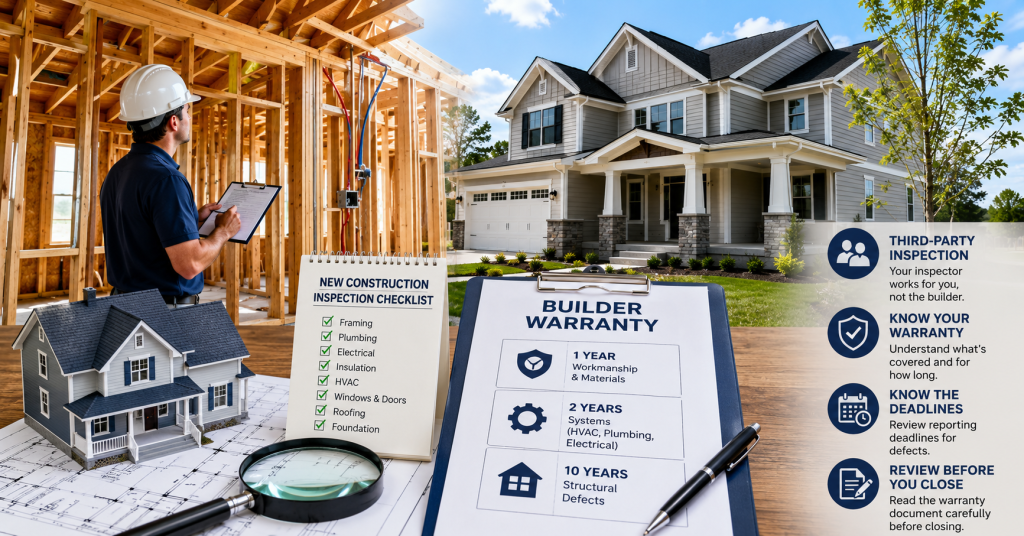
Many buyers assume a newly built home doesn’t need an inspection — this is one of the biggest mistakes in the new construction home buying process. A qualified third-party inspector can catch issues with framing, plumbing, electrical work, and insulation before drywall goes up and again before closing. Builder inspectors work for the builder, not for you.
Most new homes come with a new home builder warranty — typically one year for workmanship, two years for systems like HVAC and plumbing, and ten years for structural defects. Understanding what’s covered and how to file a claim is critical. Review the warranty document carefully before closing and note any deadlines for reporting defects. Learn more about what a home warranty covers so you’re protected from day one.
Key Tips Every Homebuyer Should Know Before Buying New Construction
Buying new construction homes can be incredibly rewarding when you go in informed. Here’s what to keep top of mind throughout the process:
- Hire your own buyer’s agent — builder agents represent the builder, not you; your agent’s commission is typically paid by the builder
- Get everything in writing — verbal promises about upgrades, move-in dates, or lot premiums mean nothing without a contract addendum
- Understand the timeline — construction delays are common; build flexibility into your lease or living arrangements
- Don’t skip the pre-drywall inspection — this is your best window to catch structural or mechanical issues before walls are closed
- Research the neighborhood’s build-out — living in an active construction zone for 2–3 years affects noise, dust, and resale value
- Compare upgrade costs vs. post-closing renovations — builder markup on upgrades can be steep; sometimes it’s cheaper to add features yourself after closing
- Review deed restrictions and HOA rules — new communities often have strict guidelines on fencing, paint colors, and landscaping that affect your long-term enjoyment
- Track your new construction home closing timeline — delays in materials or permits can push your closing date back weeks or even months
FAQs
1. Is it necessary to get an inspection on a newly built home?
Yes, a third-party inspection can identify construction issues before you close on the property.
2. What additional costs should I budget for when buying a new construction home?
You should plan for expenses such as upgrades, landscaping, HOA fees, appliances, and window treatments.
3. Do I need a real estate agent when purchasing a new construction home?
Yes, an experienced buyer’s agent can help protect your interests and negotiate with the builder.
4. What does a new construction home warranty typically cover?
Most builder warranties cover workmanship, major systems, and structural defects for varying periods.
5. How can I choose the right new construction home builder?
Research builder reviews, tour model homes, compare included features, and ask for references from past buyers.