


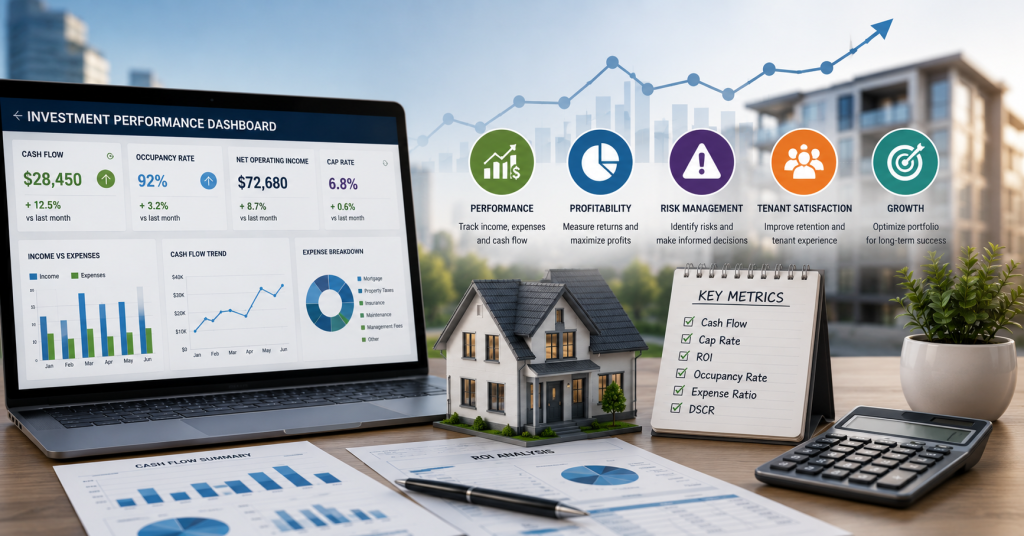
Real estate investing can be one of the most effective ways to build long-term wealth, but successful investors know that buying a property is only the beginning. To maximize returns and minimize risk, investors need to regularly monitor key performance indicators that reveal how their investments are performing.
Whether you’re investing in residential rentals, commercial properties, or multifamily units, understanding the right real estate investment metrics can help you make informed decisions. Here are five essential metrics every real estate investor should track.
1. Cash Flow
Cash flow is one of the most important metrics in real estate investment analysis. It represents the amount of money left over after all property-related expenses have been paid, including mortgage payments, taxes, insurance, maintenance, and property management fees. Positive cash flow indicates that the property is generating more income than it costs to operate.
Consistently tracking cash flow helps investors identify financial issues early and determine whether a property is contributing to their overall investment goals. A property with strong cash flow can provide steady passive income and greater financial stability, especially during market fluctuations.
2. Capitalization Rate (Cap Rate)

The capitalization rate, commonly known as the cap rate, measures a property’s potential return based on its net operating income (NOI) and current market value. It is calculated by dividing the property’s NOI by its purchase price or market value.
Cap rate is widely used to compare investment opportunities across different markets and property types. While a higher cap rate may indicate higher potential returns, it can also signal increased risk. Investors should evaluate cap rates alongside market conditions, location quality, and long-term growth potential.
3. Return on Investment (ROI)
Return on Investment (ROI) measures the overall profitability of a real estate investment. It compares the net profit generated by the property to the total amount invested. This metric helps investors understand whether a property is delivering satisfactory returns compared to other investment options.
For rental property owners, tracking ROI regularly can reveal whether improvements, renovations, or operational changes are increasing profitability. Monitoring ROI also helps investors determine when it may be beneficial to refinance, sell, or reinvest in another property.
4. Occupancy Rate
Occupancy rate measures the percentage of time a rental property is occupied by tenants. A high occupancy rate typically indicates strong demand, effective property management, and stable rental income. Conversely, prolonged vacancies can significantly impact cash flow and overall investment performance.
Tracking occupancy trends allows investors to evaluate rental pricing strategies, tenant retention efforts, and local market demand. If occupancy rates begin to decline, it may be necessary to improve marketing efforts, update property features, or adjust rental rates to remain competitive.
5. Debt Service Coverage Ratio (DSCR)
The Debt Service Coverage Ratio (DSCR) measures a property’s ability to generate enough income to cover its debt obligations. It is calculated by dividing net operating income by total debt service payments. Lenders often use this metric to assess financing eligibility and investment risk.
A DSCR above 1.0 indicates that the property generates sufficient income to cover loan payments, while a lower ratio may signal financial strain. Investors should monitor DSCR regularly to ensure long-term financial health and maintain flexibility for future financing opportunities.
Why Tracking Real Estate Investment Metrics Matters
Successful real estate investing requires more than simply collecting rent and hoping property values increase. Monitoring key investment metrics provides valuable insights into property performance, profitability, and risk management. These measurements help investors make data-driven decisions that support long-term growth and portfolio optimization.
By consistently reviewing performance indicators, investors can identify opportunities to increase revenue, reduce expenses, improve tenant satisfaction, and maximize returns. Whether you’re a beginner or an experienced investor, tracking the right metrics can significantly improve investment outcomes.
Key Metrics Every Real Estate Investor Should Monitor
- Cash Flow: Measures the actual income remaining after all operating expenses and loan payments are covered, helping investors evaluate monthly profitability.
- Cap Rate: Provides a quick way to compare investment properties and assess potential returns relative to market value.
- Return on Investment (ROI): Calculates overall investment profitability and helps determine whether a property is meeting financial expectations.
- Occupancy Rate: Indicates rental demand and property performance by measuring how often units remain occupied.
- Debt Service Coverage Ratio (DSCR): Evaluates a property’s ability to generate sufficient income to meet debt obligations and maintain financial stability.
- Regular Performance Reviews: Consistently monitoring these metrics enables smarter investment decisions, improved risk management, and stronger long-term returns.
By understanding and tracking these essential real estate investment metrics, investors can build more profitable portfolios, reduce financial uncertainty, and position themselves for sustainable growth in today’s competitive real estate market.
FAQs
1. What are the most important real estate investment metrics?
Cash flow, cap rate, ROI, occupancy rate, and DSCR are the key metrics investors should track.
2. Why is cash flow important in real estate investing?
Cash flow shows whether a property generates enough income to cover expenses and produce profit.
3. What is a good cap rate for an investment property?
A good cap rate generally ranges from 4% to 10%, depending on market conditions and risk levels.
4. How often should investors review investment metrics?
Investors should review key metrics monthly or quarterly to monitor performance and identify opportunities.
5. What does DSCR indicate in real estate investing?
DSCR indicates whether a property’s income is sufficient to cover its debt obligations.