

Key Takeaways
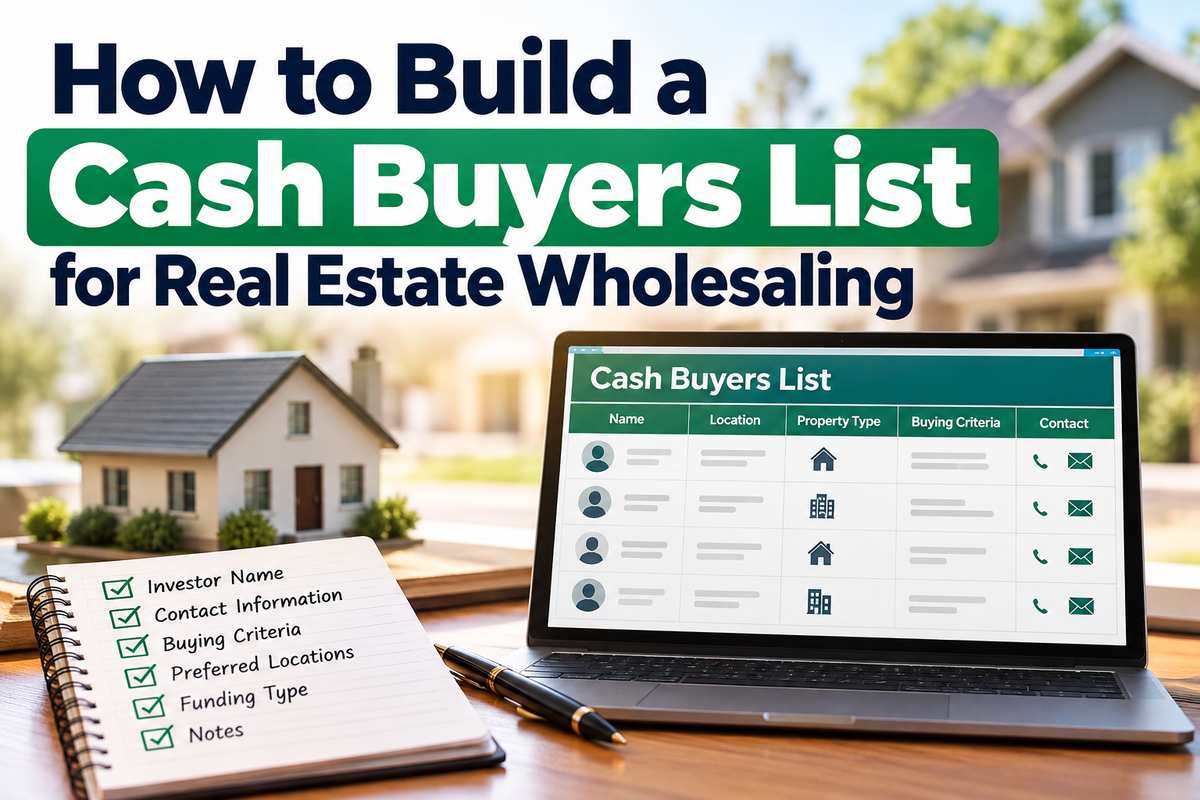
- A cash buyers list is an organized database of investors who buy properties without traditional mortgage financing, and it is the engine of a wholesaling business.
- Look for buyers where they leave a trail: public sales records, investor meetups, online groups, and referrals.
- Qualify every buyer with proof of funds, purchase history, and a quick conversation before you send deals.
- Track buy boxes, price ranges, and closing speed so you can match each deal to the right buyer.
- Protect yourself with clear contract language and by limiting what you share before a buyer commits.
To build a cash buyers list, find active investors through county records, networking, and online groups, verify they can close fast, then organize them by what they buy.
Every wholesaler eventually learns the same lesson: finding a discounted property is only half the job. If you cannot move the contract to a buyer quickly, you are stuck with a deadline and no exit. Knowing how to build a cash buyers list before you need it turns a stressful scramble into a repeatable process. This guide covers where to find buyers, how to vet them, and how to keep the list healthy.
What Is a Cash Buyers List in Real Estate Wholesaling?
A cash buyers list is a database of investors who purchase properties with cash or other non-traditional funds and can close quickly. For a wholesaler, it is the pool of people you market contracts to after you tie up a deal with a seller.
Why Wholesalers Need One Before the First Deal
Without buyers, even a great discount is risky. A ready list shortens your marketing time and gives you leverage when negotiating your assignment fee.
Who Counts as a Cash Buyer?
Flippers, landlords, builders, and small investment groups all qualify. Some use their own savings, while others rely on hard money or private lenders. What they share is the ability to close without waiting on a traditional bank loan.

Where to Find Cash Buyers for Wholesale Real Estate Deals
No single source works for everyone, so use several.
Public Records and Sales Data
County recorder and assessor records show recent sales. Look for purchases with no mortgage recorded and for owners, often LLCs, who bought several properties in the past year. Repeat buyers are the strongest prospects because they have already shown they close.
Networking and Local Investor Groups
Real estate investment associations, local meetups, and auctions put you in the same room as active buyers. Introduce yourself, ask what they are buying, and follow up within a day. Agents who work with investors, title companies, and hard money lenders can also refer reliable names.
Auctions and Other Wholesalers
Courthouse and online auctions show who bids with cash, and bidders are often open to a conversation afterward. Fellow wholesalers in your market may share buyers in exchange for joint deals, and contractors or property managers often know investors who are looking for their next project.
Online and Social Channels
Local investor groups on social platforms, online forums, and simple landing pages can attract buyers who want to be notified of new deals.

How to Identify and Qualify Serious Cash Buyers
A long list of unresponsive names is not a real list. Qualifying keeps it useful.
Questions Worth Asking
Ask what property types, price range, and neighborhoods they want, how many properties they bought recently, and how fast they typically close. Ask whether they use cash, a private lender, or hard money. Buyers who answer clearly and quickly usually act the same way on deals.
Starting With a Small Test Deal
A quick way to separate talkers from buyers is to send a well-matched property and watch what happens. Note how fast they reply, whether they ask smart questions about repairs and ARV, and whether they follow through with an offer or a showing.
Verifying Proof of Funds
Request a recent bank statement, a lender letter, or other proof of funds before you send your best opportunities. Check a few of their recent purchases in public records and confirm they match what they told you.
What Information Should You Include in Your Cash Buyers List?
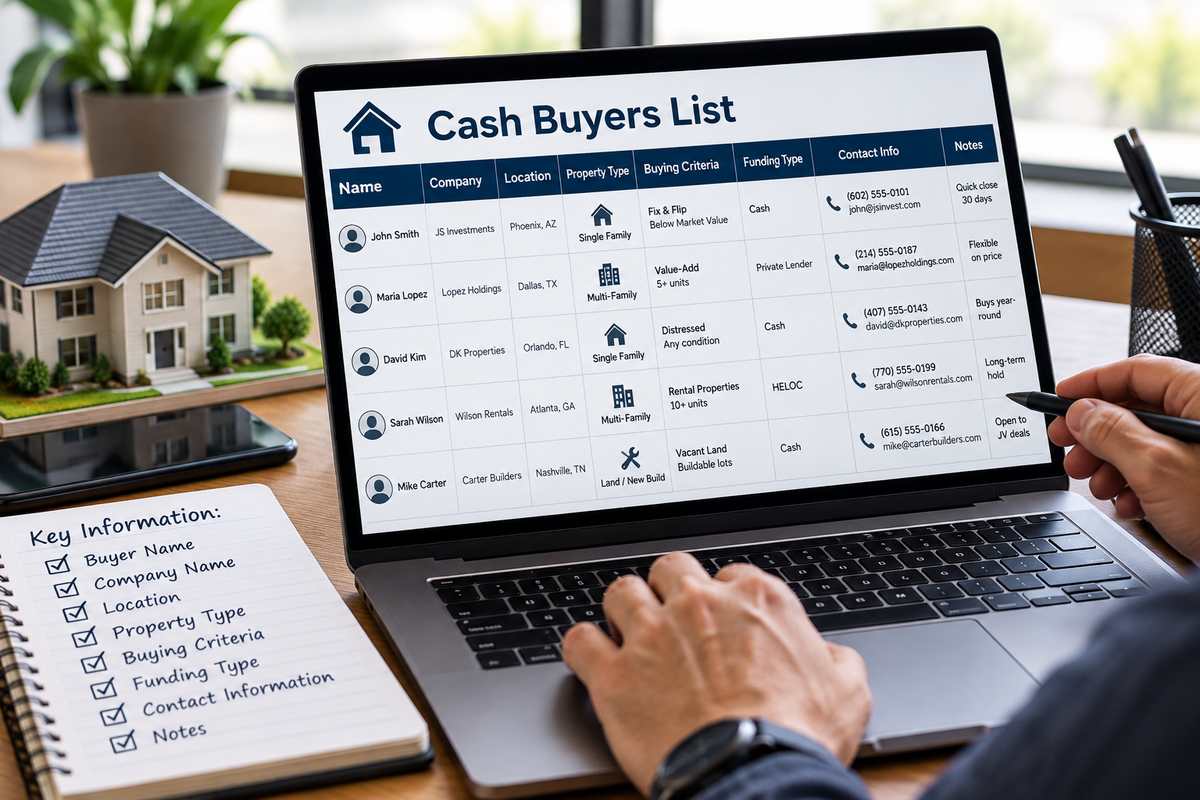
A spreadsheet or CRM works, as long as it captures the details that drive decisions. At a minimum, track:
- Name, company, phone, email, and preferred contact method
- Target areas, property types, and price range
- Buy box details such as minimum bedrooms or acceptable condition
- Funding source and proof of funds status
- Recent purchases and typical closing time
- Notes from past conversations and deals
How to Match Wholesale Deals With the Right Cash Buyers
Blasting every deal to everyone trains buyers to ignore you. Instead, filter the list by location, price, and condition, then send the deal to the best fits first. For example, a buyer who flips three-bedroom homes under $200,000 in two zip codes should not receive a $450,000 duplex pitch. One well-matched deal builds more trust than ten loosely matched ones.
Presenting the Deal Clearly
Share the essentials: general area, asking price, ARV estimate, repair scope, and closing timeline. If a buyer says no, ask why, because that feedback sharpens your next match.
Setting a Clear Response Window
Give buyers a deadline, such as 48 hours, so they understand deals move quickly.
How to Maintain and Grow Your Cash Buyers List
A list loses value as buyers change strategies, move markets, or stop investing.
Keep It Clean
Review the list every few months. Remove invalid contacts, note who stopped responding, and update buy boxes. A smaller, accurate list beats a large, stale one.
Keep It Growing
Add buyers after every auction, networking event, and closed deal. Ask your best buyers who else they trust, and track which sources produce the most responsive investors so you can focus your effort there.
Segment Your Buyers
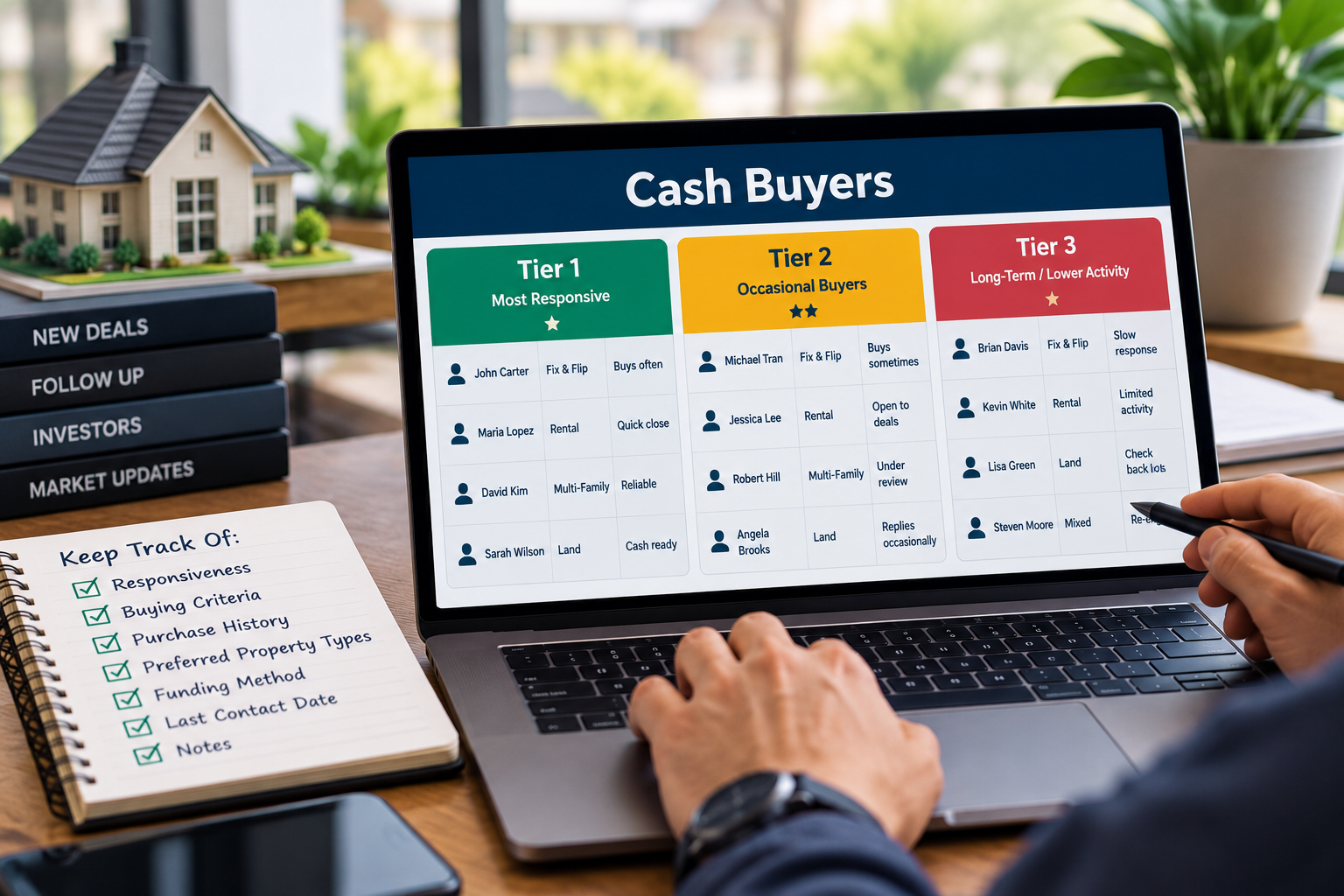
Sort buyers into tiers based on responsiveness and track record. Your top group gets first look at new deals, while others receive them later. A short check-in every few months asking whether their criteria have changed keeps relationships warm and the data accurate.
How to Protect Your Wholesale Deals When Working With Cash Buyers
Your contract and your information are your leverage, so protect both.
Limit What You Share
Hold back the exact address and seller details until a buyer shows real interest or signs a simple confidentiality or agreement. This reduces the risk of someone going directly to the seller.
Use Clear Contract Language
Make sure your purchase agreement is assignable and your assignment agreement spells out the fee, earnest deposit, and closing date. Rules on wholesaling and licensing vary by state, so have a local attorney review your documents.
Follow Communication Rules
If you email or text your list, follow applicable laws such as CAN-SPAM and TCPA, and give buyers an easy way to opt out.
Build a Stronger Cash Buyers List for Your Real Estate Wholesaling Business
A strong cash buyers list is built one verified relationship at a time. The same is true of your own knowledge. Wholesaling works better when you understand the terms, the financing, and the distressed-property opportunities behind each deal.
Dwanderful is a real estate investing resource created by real estate investor and podcast host Dwan Bent-Twyford. Since understanding financing is an important part of investing, Dwan offers resources to help investors build their knowledge and make more informed decisions.
New wholesalers may find her free Real Estate Lingo book useful for learning essential real estate terms, while Five Pillars of Real Estate Investing covers the strategies behind a strong investing foundation. Because wholesalers often source discounted deals from distressed situations, the LEVEL 1: Complete Foreclosure Investors’ Choice Program teaches foreclosure investing strategies, and Foreclosure Fortunes helps investors identify foreclosure opportunities and avoid common pitfalls. The Fed Up Program focuses on helping homeowners in financial distress while creating opportunities for investors.
Dwan also offers How to Sell a House When It’s Worth Less Than the Mortgage, which covers options such as short sales and subject-to strategies, and Short-Sale Pre-Foreclosure Investing, which explores buying properties through short-sale and pre-foreclosure opportunities.
If you’re still deciding on your next investment move, Dwanderful’s quiz takes less than a minute and can help you explore paths toward a six-figure income goal, which some investors aim to reach within six months. Results vary widely, depend on your market, effort, and experience, and are never guaranteed. Contact us now!

Frequently Asked Questions
How many cash buyers do I need before I start wholesaling real estate?
There is no fixed number. A small group of responsive, verified buyers is often a better start than hundreds of cold contacts. Grow from there as you close deals.
Can I build a cash buyers list without paying for leads or software?
Yes. County records, investor meetups, online groups, and referrals cost little or nothing, and a spreadsheet can handle tracking. Paid tools mainly save time.
Do cash buyers always use their own money to purchase wholesale properties?
No. Some use private lenders, hard money, or credit lines. What matters is that they can close quickly without a traditional mortgage, so verify proof of funds.
What should I do if a cash buyer backs out of a wholesale deal?
Review your contract for earnest deposit and contingency terms, then notify your backup buyers right away. If time is short, renegotiate with the seller or extend closing.
Is it legal to share wholesale property deals with a cash buyers list?
Generally yes, but rules vary by state. Disclose that you are marketing a contract rather than owning the property, follow email and text regulations, and check licensing laws with a local attorney.

Editorial Review by Dwan,
Real Estate Investor & Podcast Host
Dwan is America’s Most Sought After Real Estate Investor™ and The Queen of Short Sales™. She went from a single mom with no resources to building a successful real estate business through wholesaling, rehabbing, rentals, and commercial properties. Today, she teaches investors how to succeed without costly mistakes through her books, podcast, and training programs.
Learn More