


Buying an investment property can be an exciting opportunity, but a promising deal on the surface may hide financial, structural, or legal problems. This is why real estate due diligence is an essential part of the investment process. Due diligence allows investors to examine a property carefully before completing the purchase and determine whether the potential returns justify the risks. From reviewing financial records to inspecting the physical condition of the property, every step provides valuable information. A thorough evaluation can help investors avoid costly surprises, negotiate more effectively, and make confident decisions based on facts rather than assumptions.
What Is Due Diligence in Real Estate?
Real estate due diligence is the process of investigating and verifying important information about a property before finalizing a purchase. It helps investors confirm that the property, financial projections, ownership records, and overall investment opportunity match what was presented by the seller. The process may include reviewing property documents, evaluating income and expenses, completing inspections, researching zoning requirements, and examining local market conditions. Due diligence is important for residential, multifamily, and commercial investments because each property comes with different risks. Taking time to verify the details can help investors identify potential concerns before they become expensive problems after closing.
What Financial Information Should Investors Review?
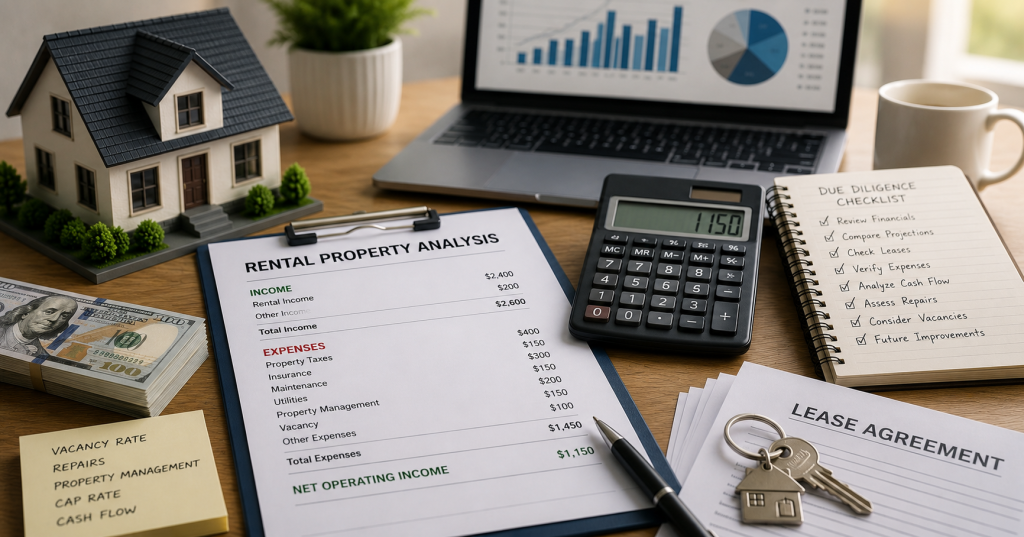
Understanding a property’s financial performance is one of the most important parts of due diligence. Investors should review rental income, operating expenses, property taxes, insurance costs, maintenance expenses, utility bills, and any existing leases. For income-producing properties, comparing actual financial records with the seller’s projections can help determine whether expected returns are realistic. Learning how to analyze a rental property investment can also help investors evaluate income, expenses, and potential profitability before purchasing. Investors should account for vacancies, repairs, property management fees, and future improvements when estimating cash flow.
Why Is a Property Inspection Important?
A professional property inspection can uncover physical problems that may not be noticeable during a basic walkthrough. Investors should evaluate the roof, foundation, plumbing, electrical systems, HVAC equipment, windows, drainage, and overall structural condition. Older properties may require additional attention because outdated systems or deferred maintenance can significantly increase renovation costs. Investors should estimate immediate repair expenses as well as improvements that may be required over the next several years. Discovering problems before closing gives buyers an opportunity to reconsider the investment, adjust their renovation budget, or negotiate with the seller. Understanding the property’s true condition helps protect projected returns.
What Legal and Market Factors Should You Check?

Legal and market research can reveal issues that directly affect how a property can be used and its future value. Investors should verify the property title, zoning regulations, permits, boundaries, liens, deed restrictions, and any homeowners association requirements that apply. Identifying common property title issues before closing can help investors avoid unexpected ownership disputes, liens, or other complications. Rental properties may also be subject to local landlord-tenant laws, licensing rules, or short-term rental restrictions. Investors should also research rental demand, vacancy rates, comparable properties, employment trends, and planned development in the surrounding area.
Real Estate Due Diligence Checklist
Before moving forward with an investment property, investors should organize their findings and make sure the most important areas have been carefully reviewed. Understanding key real estate investment metrics can help investors evaluate potential returns and compare different opportunities more effectively. A consistent due diligence process makes it easier to identify risks, estimate expenses, and determine whether a property supports your investment goals. Important items to review include:
- Financial Records: Verify rental income, operating expenses, taxes, insurance, and cash flow.
- Property Condition: Inspect the structure, roof, plumbing, electrical systems, HVAC, and major repairs.
- Title and Ownership: Check for liens, ownership disputes, easements, or title issues.
- Zoning and Regulations: Confirm permitted property uses and applicable rental requirements.
- Tenant Information: Review leases, deposits, payment history, and occupancy.
- Local Market: Research rental demand, vacancy rates, comparable properties, and neighborhood trends.
Conclusion
Real estate due diligence gives investors the information they need to determine whether a property truly supports their investment goals. Reviewing financial records, inspecting the property, verifying legal information, and researching the local market can reveal risks that might otherwise appear after closing. No investment property is completely risk-free, but a structured due diligence process can reduce uncertainty and help investors make better-informed decisions. Instead of relying solely on asking price or projected income, evaluate the complete picture and seek professional assistance when necessary. Careful research before buying can protect your capital and support stronger long-term real estate investment decisions.
FAQs
1. What is due diligence in real estate investing?
Due diligence is the process of reviewing a property’s financial, physical, legal, and market information before completing a purchase. It helps investors verify important details and identify potential risks before committing to an investment.
2. How long does real estate due diligence take?
The timeline depends on the property and complexity of the transaction. Investors should allow enough time to complete inspections, review financial and legal documents, research the market, and address any concerns discovered during the process.
3. What documents should investors review before buying?
Important documents may include existing leases, income and expense records, property tax information, insurance records, title documents, permits, property disclosures, maintenance records, and other documents relevant to the property’s ownership and operation.
4. Why is property inspection part of due diligence?
A professional inspection can identify structural problems, deferred maintenance, outdated systems, and potential repairs that could affect the property’s value, operating expenses, and expected investment returns.
5. Can due diligence help investors negotiate a better deal?
Yes. If inspections, financial reviews, or legal research uncover significant problems, investors may use those findings to negotiate the purchase price, request repairs or other concessions, or reconsider the investment before closing.