


Key Takeaways
- Real estate commissions are fully negotiable in 2026, so agents should discuss compensation openly with buyers rather than treating it as a standard or assumed fee.
- Buyer-agent compensation can no longer be advertised on the MLS, but sellers can still choose to offer compensation through negotiation.
- Written buyer agreements are required before touring homes, making early discussions about services, compensation, and responsibilities essential.
- Buyers, sellers, or both parties may contribute toward buyer-agent compensation, depending on the terms negotiated for each transaction.
- New agents should explain fees in both percentage and dollar terms, clearly outlining what happens if the seller does or does not offer compensation.
- Compliance should become part of every agent’s routine, including documenting disclosures, following brokerage policies, and keeping compensation language off MLS listings.
In 2026, real estate commissions are fully negotiable, buyer-agent fees are no longer listed on the MLS, and buyers must sign a written agreement before touring homes with an agent.
If you got your license in the last year or two, you walked into an industry that looks different than it did even five years ago. New agents today are asking the same question over and over: what are the new rules for real estate commissions, and how do I explain them to a client without fumbling the conversation? This guide breaks down the new commission real estate landscape in plain language, so you can walk into your next buyer consultation sounding like you’ve done this for a decade, not a month.
What Changed With Real Estate Commissions in 2026?
The short version is this: commissions used to be baked into the transaction quietly, and now they’re a conversation you have on purpose. For years, sellers set a total commission, split it between their listing agent and whoever brought the buyer, and advertised that split right on the MLS. Buyers rarely saw the number and almost never negotiated it.
That structure came out of a set of industry-wide legal settlements that reshaped how brokerages operate nationwide. The practical result for 2026 is that buyer-agent compensation can no longer be advertised through the MLS, and every agent representing a buyer needs a signed agreement before showing homes. Commissions themselves haven’t disappeared. They’ve just moved out into the open.
Why the Real Estate Commission Changes Matter for New Agents Specifically
Veteran agents who built their business on referrals and repeat clients have some cushion while they adjust. New agents don’t have that cushion yet. Every conversation about fees is happening with clients who are watching you explain the process for the first time, which means you need to know this material cold. Clients can tell when an agent is reciting talking points versus actually understanding the “why” behind the new commission structure.
How Buyer-Agent Compensation Works in 2026
Buyer-agent compensation is now a matter of direct negotiation rather than a fixed line item everyone assumes. In practice, most markets haven’t seen dramatic swings in what agents actually charge. National averages have held fairly steady, and in a lot of local markets, buyer-agent compensation still lands in a familiar range when a seller chooses to offer it. What’s different is that the number is disclosed, discussed, and agreed to in writing rather than assumed.
Who Actually Pays the Fee
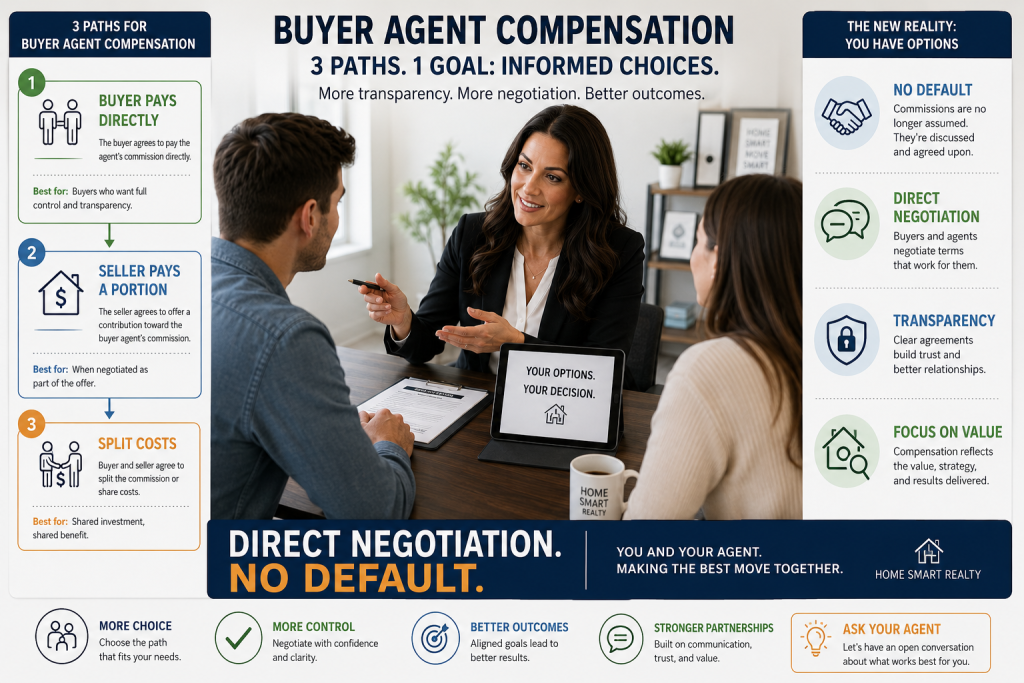
There are three paths a deal can take now. The buyer can pay their agent directly out of pocket. The seller can offer to cover buyer-agent compensation as part of the deal, often built into negotiations rather than advertised upfront. Or the two sides can split it, with the seller crediting part of the fee toward the buyer’s closing costs. None of these is the default anymore. Each one gets decided on a case-by-case basis, which is exactly why your buyer consultation script needs to cover all three.
Written Buyer Agreements: What New Agents Need to Know
This is the single biggest procedural shift for new agents to internalize. You cannot tour homes with a buyer, physically or virtually, without a signed representation agreement in place first. Skipping this step isn’t just a bad habit, it’s a compliance problem that can follow you.
What the Agreement Should Spell Out
A solid buyer agreement should state your compensation clearly, describe what happens if the seller doesn’t offer to cover it, and explain what the buyer is responsible for if that gap exists. It should also cover the length of the agreement and what specific services you’re providing. Vague agreements create disputes later, usually right around closing when nobody wants a surprise. Walk your buyer through the document line by line at the first meeting rather than sliding it across the table to sign quickly. That five extra minutes builds trust that pays off for the rest of the transaction.
Can Sellers Still Pay the Buyer’s Agent?
Yes, and this is a point of confusion for a lot of buyers who’ve heard secondhand that the settlement ended seller-paid commissions entirely. It didn’t. Sellers can absolutely still offer to cover buyer-agent compensation, they just can’t advertise that offer inside the MLS listing itself. The offer now happens through direct conversation, often as part of the purchase offer or through separate seller concessions negotiated outside the MLS. In many markets, sellers still choose to offer this compensation on the majority of transactions because it keeps their listing competitive with buyers who are working with an agent.
How New Agents Should Handle Commission Negotiations and Disclosures
Treat the compensation conversation as a normal, expected part of your process rather than an awkward one. Bring it up early, before a client can find out from a listing agent or a Google search and wonder why you didn’t mention it first.
A Simple Framework for the Conversation
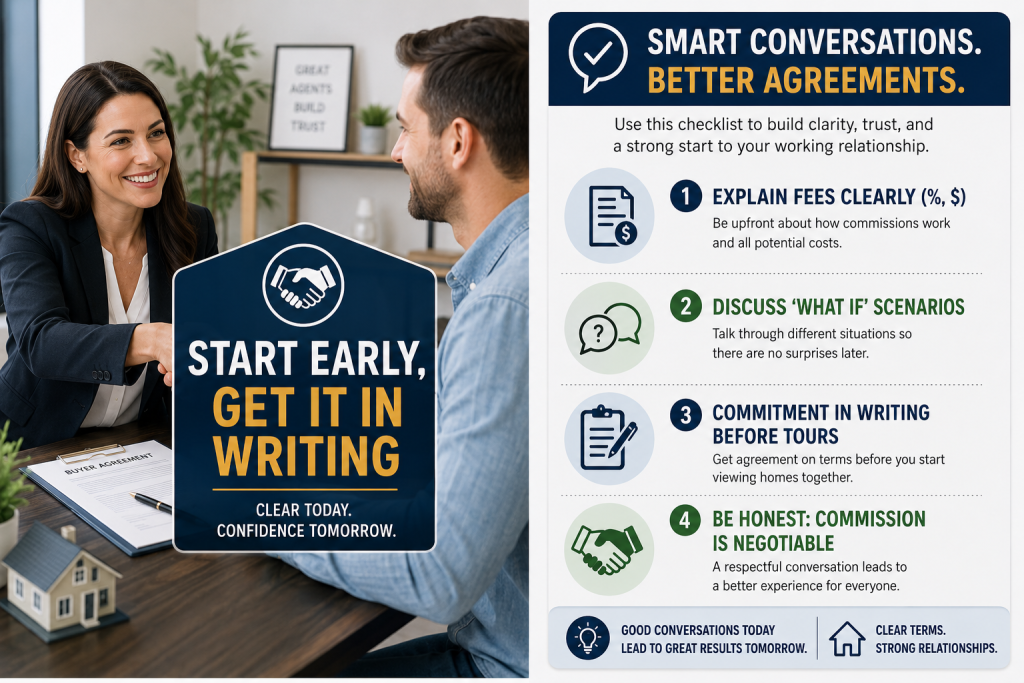
Explain your fee in dollar terms as well as percentage terms so it’s concrete. Walk through what happens if the seller offers compensation versus what happens if they don’t. Put everything in writing before you show a single property. And when a client asks if the fee is negotiable, answer honestly. It is, and pretending otherwise damages trust faster than almost anything else in this business.
What New Real Estate Agents Should Do to Stay Compliant
Compliance isn’t complicated once it’s a habit. Get the written agreement signed before touring, keep your MLS-facing marketing free of compensation language, document every disclosure conversation you have with a client, and stay current with your brokerage’s specific policies, since those can be stricter than state or MLS rules. Ask your broker or a mentor to review your first few agreements until the language feels natural. Most compliance mistakes among new agents aren’t intentional, they’re just the result of moving fast without a checklist.
Stay Informed and Prepared for Real Estate Commission Changes in 2026
The agents who thrive through a shift like this are the ones who treat it as a chance to actually understand the business better, not just a new form to sign. That same mindset applies to the buyers and investors you’ll be working with, since commission structure is really just one piece of a much bigger financing picture.
Dwanderful is a real estate investing resource created by real estate investor and podcast host Dwan Bent-Twyford. Since understanding financing is an important part of investing, Dwan offers resources to help investors build their knowledge and make more informed decisions.
Her free Real Estate Lingo book explains essential real estate terms, while Five Pillars of Real Estate Investing provides practical knowledge and strategies for building a strong investing foundation. For investors interested in distressed properties, LEVEL 1: Complete Foreclosure Investors’ Choice Program teaches foreclosure investing strategies, while Foreclosure Fortunes helps investors identify foreclosure opportunities and avoid common pitfalls. The Fed Up Program focuses on helping homeowners in financial distress while creating opportunities for investors.
Dwan also offers How to Sell a House When It’s Worth Less Than the Mortgage, covering options such as short sales and subject-to strategies, and Short-Sale Pre-Foreclosure Investing, which explores buying properties through short-sale and pre-foreclosure opportunities.
If you’re still deciding on your next investment move, Dwanderful’s quiz game takes less than a minute and helps you discover how you could potentially generate six figures in the next six months, whether you’re buying your first property or your next. Contact us now!

Frequently Asked Questions About Real Estate Commission Changes
Do I have to use a real estate agent under the new commission rules?
No. You’re never required to hire an agent to buy or sell a home. The new rules changed how agent compensation is disclosed and negotiated, not whether representation is mandatory.
Can I negotiate a real estate agent’s fee?
Yes. Commission rates have always technically been negotiable, but the new rules make that negotiation explicit and expected rather than something buyers had to know to ask about.
Will I have to pay my real estate agent directly when I buy a home?
Possibly. It depends on whether the seller agrees to cover buyer-agent compensation as part of the deal. Your buyer agreement should spell out what happens either way before you start touring homes.
What happens if I don’t understand the compensation agreement my agent gives me?
Ask before you sign. A good agent will walk through every line of the agreement with you, and you’re entitled to ask questions or request changes before agreeing to any terms.
Do the new commission rules apply the same way in every state?
The core changes apply nationwide through MLS and industry-wide practice changes, but local market norms, typical commission ranges, and specific brokerage policies can vary by state and even by region.

Editorial Review by Dwan,
Real Estate Investor & Podcast Host
Dwan is America’s Most Sought After Real Estate Investor™ and The Queen of Short Sales™. She went from a single mom with no resources to building a successful real estate business through wholesaling, rehabbing, rentals, and commercial properties. Today, she teaches investors how to succeed without costly mistakes through her books, podcast, and training programs.
Learn More