

Key Takeaways
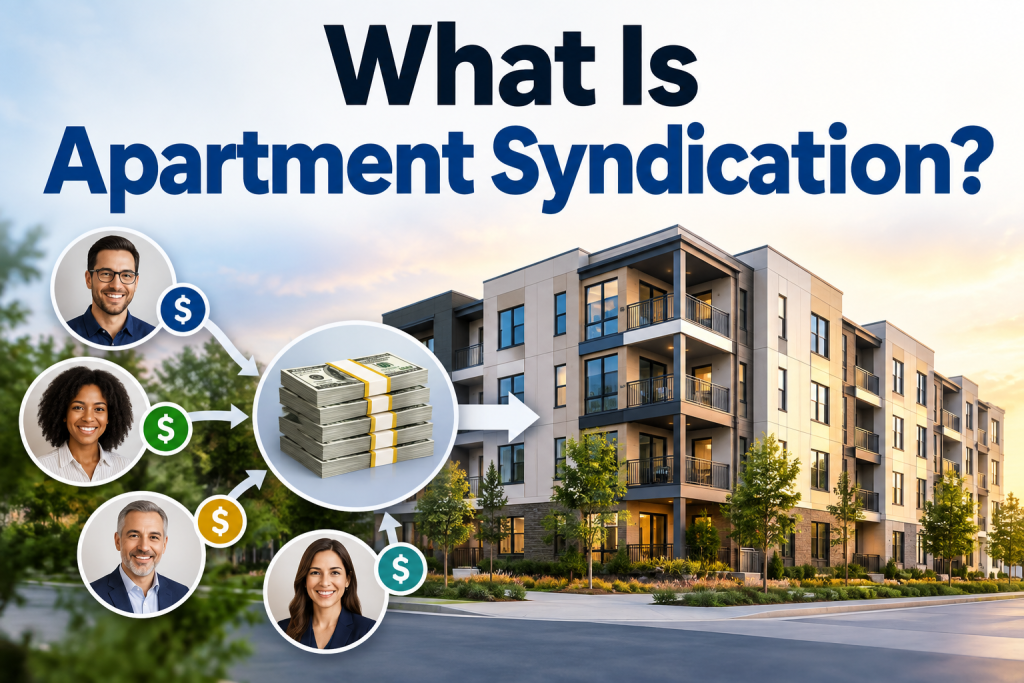
- Apartment syndication is a partnership structure where a sponsor manages the deal and passive investors provide capital.
- Investors earn returns through rental cash flow distributions and profit at the property’s eventual sale or refinance.
- Deals typically run through acquisition, underwriting, capital raising, closing, management, and an exit strategy.
- Returns aren’t guaranteed, and investors should review offering documents carefully before committing funds.
- Apartment syndications can offer access to larger properties than most individual investors could purchase alone.
Apartment syndication lets multiple investors pool money to buy large apartment properties together, sharing both the profits and the responsibilities of ownership.
Buying an apartment complex on your own takes serious capital, time, and hands-on management experience most people simply don’t have. That’s where apartment syndication comes in. It’s a way for everyday investors to own a piece of a 100-unit or 300-unit property without having to find the deal, secure financing, or manage tenants themselves. If you’re researching ways to grow wealth through real estate without becoming a full-time landlord, understanding what apartment syndication is and how it works is a smart place to start.
Understanding Apartment Syndication
At its core, apartment syndication is a legal and financial arrangement where a group of investors combine resources to purchase a multifamily property that would otherwise be out of reach individually. One party, known as the sponsor, sources the deal, arranges financing, and manages the asset. The remaining investors contribute capital and receive a share of the profits, typically without taking on any day-to-day management duties.
Why Apartment Syndications Exist
Multifamily properties, especially larger ones, generate more stable income than single-family rentals because vacancy risk is spread across many units. But the price tag on a 150-unit community can run into tens of millions of dollars, well beyond what one investor can typically finance alone. Apartment syndications solve this by letting a group share the purchase price, the risk, and the reward.

Who Is Involved in an Apartment Syndication?
Every syndication involves two main groups of participants, each with distinct roles and responsibilities.
The Sponsor (General Partner)
The sponsor, sometimes called the general partner or GP, is the person or team that finds the property, negotiates the purchase, secures financing, and oversees operations after closing. Sponsors typically have prior experience in real estate acquisitions or property management and often invest some of their own capital alongside their investors.
The Passive Investors (Limited Partners)
Limited partners, or LPs, are the individuals who contribute capital in exchange for equity in the deal. They don’t handle leasing, maintenance, or tenant issues; instead, they receive regular updates and distributions from the sponsor. Some syndications also involve a property management company that handles daily operations under the sponsor’s direction.
How Does an Apartment Syndication Deal Work From Start to Finish?
Understanding the lifecycle of a syndication deal helps investors know what to expect at each stage.
Deal Sourcing and Underwriting
The sponsor identifies a property, analyzes its financials, and runs projections on rental income, expenses, and potential upside, such as renovations or better management practices.
Raising Capital
Once the sponsor has the property under contract, they open the deal to investors, often through a private placement memorandum that outlines the terms, projected returns, and risks.
Closing and Stabilization
After enough capital is raised, the deal closes, and the sponsor begins executing the business plan, which may include renovations, rent increases, or operational improvements to boost the property’s value.
Ongoing Management and Distributions
Throughout the hold period, which often ranges from three to seven years, investors typically receive periodic distributions from rental income while the sponsor manages the asset.
Exit
Eventually, the property is sold or refinanced, and remaining profits are distributed to investors based on the terms outlined in the original agreement.

How Do Investors Make Money From Apartment Syndication?
Investors generally earn returns two ways. The first is cash flow: regular distributions paid from the property’s rental income after expenses and debt service are covered, often on a quarterly schedule.
The second is appreciation, realized when the property is sold or refinanced. If the sponsor successfully increases the property’s value through improvements or stronger management, investors receive a share of the profit based on their ownership percentage. Some syndications also offer a preferred return, meaning investors are paid a set percentage before the sponsor collects their share.
What Are the Benefits and Risks of Apartment Syndication?
Like any investment, apartment syndications come with upside potential and real risks that deserve careful consideration.
Benefits
Syndications give investors access to larger, potentially more stable properties than they could purchase alone, plus the benefit of passive involvement since the sponsor handles daily operations. They also allow for diversification across markets and property types without requiring landlord experience.
Risks
Returns aren’t guaranteed, and market conditions, interest rate changes, or poor management can all affect performance. Capital is typically illiquid, meaning investors can’t easily withdraw funds before the property sells. Choosing an inexperienced or overly optimistic sponsor is one of the biggest risk factors in any deal.
How Can Investors Evaluate an Apartment Syndication Opportunity?
Before committing capital, investors should look closely at both the deal and the people behind it.
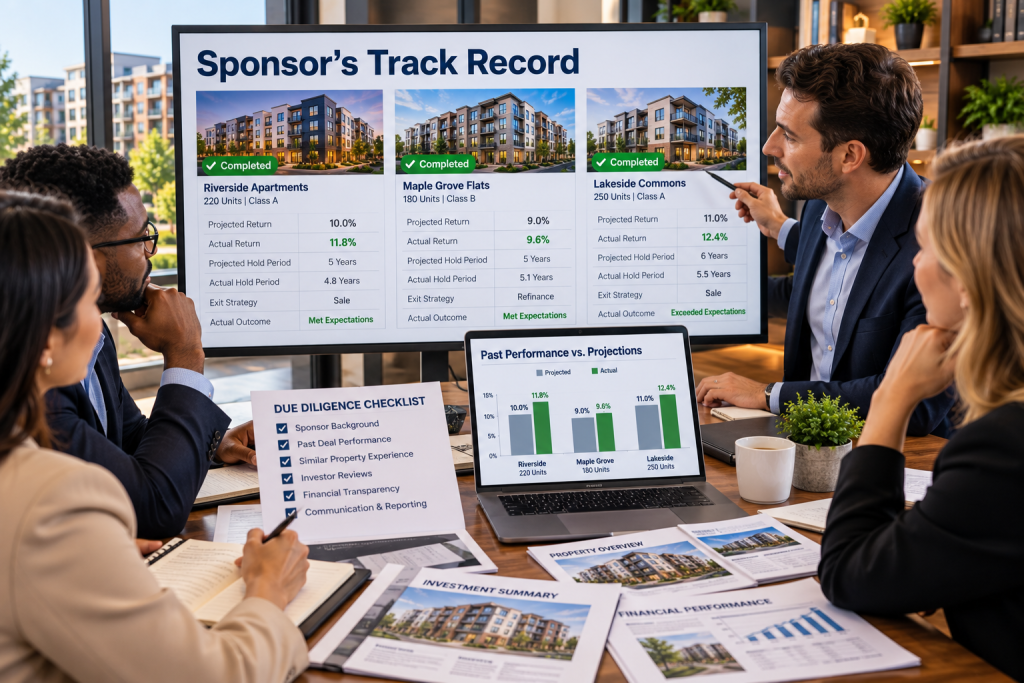
Evaluate the Sponsor’s Track Record
Research the sponsor’s history with similar properties, including how past deals performed compared to their original projections.
Review the Underwriting Assumptions
Look at whether rent growth, expense estimates, and exit cap rate assumptions seem realistic given current market conditions rather than overly optimistic.
Understand the Fee Structure
Syndications often include acquisition fees, asset management fees, and a profit split, so investors should know exactly how those fees affect their net returns.
Read the Full Offering Documents
The private placement memorandum and operating agreement outline the risks, structure, and investor rights, and should be reviewed carefully, ideally with a financial or legal advisor.
How Can You Get Started With Apartment Syndication?
Getting started typically begins with building relationships with sponsors through networking events, real estate investment groups, or online platforms that connect investors with syndication opportunities. Most syndications require investors to be accredited, meaning they meet certain income or net worth thresholds set by securities regulations, though some deals are open to non-accredited investors too.
From there, it helps to start small, ask plenty of questions, and thoroughly vet a few sponsors before committing significant capital. Many experienced investors recommend starting with a smaller check in a deal from a sponsor with a proven track record, then scaling up as they grow more comfortable with the process.
Ready to Explore Apartment Syndication?
Dwanderful is a real estate investing resource created by real estate investor and podcast host Dwan Bent-Twyford. Since understanding financing is an important part of investing, Dwan offers resources to help investors build their knowledge and make more informed decisions.
Her free Real Estate Lingo book explains essential real estate terms, while Five Pillars of Real Estate Investing provides practical knowledge and strategies for building a strong investing foundation. For investors interested in distressed properties, LEVEL 1: Complete Foreclosure Investors’ Choice Program teaches foreclosure investing strategies, while Foreclosure Fortunes helps investors identify foreclosure opportunities and avoid common pitfalls. The Fed Up Program focuses on helping homeowners in financial distress while creating opportunities for investors.
Dwan also offers How to Sell a House When It’s Worth Less Than the Mortgage, covering options such as short sales and subject-to strategies, and Short-Sale Pre-Foreclosure Investing, which explores buying properties through short-sale and pre-foreclosure opportunities.
If you’re still deciding on your next investment move, Dwanderful’s quiz game takes less than a minute and helps you discover how you could potentially generate six figures in the next six months, whether you’re buying your first property or your next. Contact us now!

Frequently Asked Questions
What is the minimum amount I need to invest in an apartment syndication?
Minimums vary widely by sponsor and deal, but many apartment syndications require anywhere from $25,000 to $100,000 to participate.
Can I invest in an apartment syndication if I have never owned an investment property?
Yes, prior property ownership isn’t usually required since the sponsor manages the asset, though many deals do require investors to meet accredited investor standards.
How long is my money typically invested in an apartment syndication?
Most syndications have a projected hold period of three to seven years, though the actual timeline depends on market conditions and the sponsor’s business plan.
Can I lose money in an apartment syndication?
Yes, like any investment, apartment syndications carry risk, and factors like poor management, market downturns, or unexpected expenses can reduce or eliminate projected returns.
What documents should I review before investing in an apartment syndication?
Investors should carefully review the private placement memorandum, operating agreement, and sponsor’s track record before committing any capital.

Editorial Review by Dwan,
Real Estate Investor & Podcast Host
Dwan is America’s Most Sought After Real Estate Investor™ and The Queen of Short Sales™. She went from a single mom with no resources to building a successful real estate business through wholesaling, rehabbing, rentals, and commercial properties. Today, she teaches investors how to succeed without costly mistakes through her books, podcast, and training programs.
Learn More