

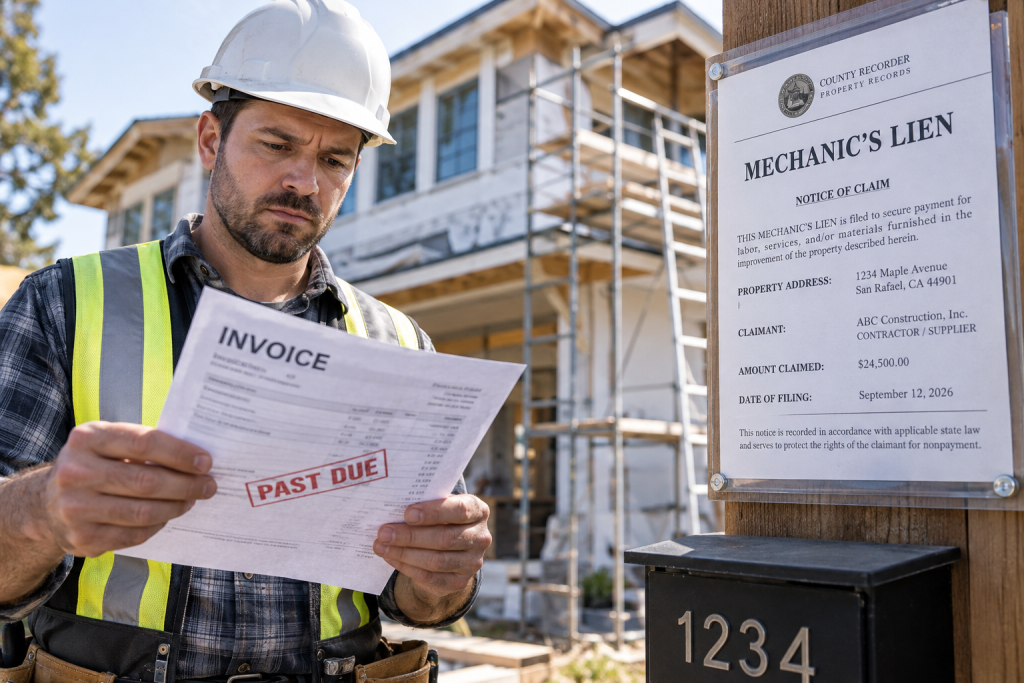
Key Takeaways
- A mechanic’s lien is a legal claim placed on a property when a contractor, subcontractor, or supplier isn’t paid.
- Anyone who contributes labor, services, or materials to a project may be eligible to file, depending on state law.
- Filing deadlines are strict, usually 60 to 120 days after work is completed.
- An unpaid lien can cloud a title, delay a sale, and complicate refinancing.
- Liens can be resolved through payment, negotiation, a bond, or litigation.
- Investors should research a property’s title before purchase, since an existing lien can become the new owner’s responsibility.
A mechanic’s lien is a legal claim a contractor or supplier files against a property when they aren’t paid for labor or materials, allowing them to seek payment through the property itself.
What Is a Mechanic’s Lien?
If you’ve ever asked, “What is a mechanic’s lien?” The short answer is that it’s a tool contractors and suppliers use to protect themselves from nonpayment. When someone performs work, improves a property, or supplies materials and doesn’t get paid, they can file a lien against that property, attaching the claim to the title itself rather than just the person who owes the money.
This matters for owners and investors alike. A lien can affect marketability, complicate financing, and in some cases lead to foreclosure if never resolved. Understanding how mechanic’s liens work is one of the less glamorous but essential parts of owning or investing in real estate.
Understanding Mechanic’s Lien Basics
Why the Lien Exists
Construction work is expensive, and contractors often front labor and materials before they’re paid in full. A mechanic’s lien gives them leverage. Rather than suing the property owner for breach of contract, which can take years, the lien attaches directly to the real estate, giving the unpaid party a faster path to recovering what they’re owed.
How a Lien Differs From Other Claims
A mechanic’s lien differs from a general debt or judgment lien because it’s tied specifically to work performed on that property. It also tends to take priority in ways other claims don’t, which is why title companies and lenders take it seriously during a sale or refinance.
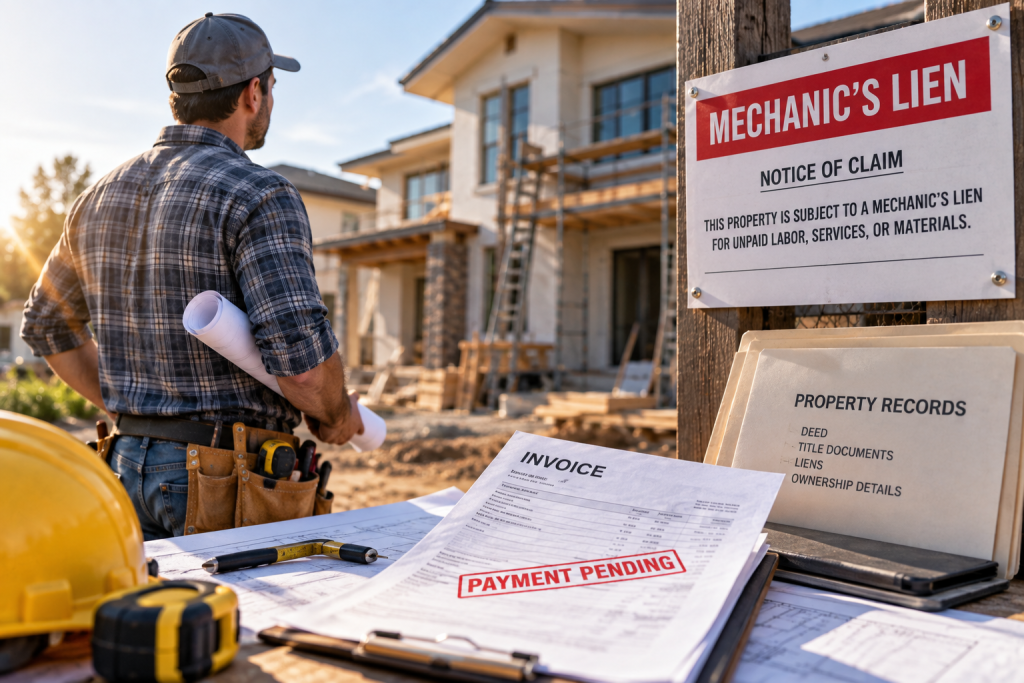
Who Can File a Mechanic’s Lien?
The list of people eligible to file is broader than most property owners expect.
Direct Contractors
General contractors with a direct agreement with the property owner are the most straightforward case. If they complete work and aren’t paid, they typically have the clearest path to filing.
Subcontractors and Suppliers
This is where it gets tricky. Subcontractors, electricians, plumbers, and even material suppliers who never spoke directly to the owner can often still file a lien, as long as they contributed to the project. Many owners are surprised to learn they paid their general contractor in full, only to discover the contractor never paid a subcontractor.
Architects, Engineers, and Laborers
In many states, design professionals and individual laborers also qualify, though requirements vary. Some states require preliminary notices sent early in the project to preserve lien rights later.
When Can a Mechanic’s Lien Be Filed?
Timing is one of the most misunderstood parts of the process.
Statutory Deadlines
Every state sets its own deadline, but most fall between 60 and 120 days after work was completed or materials last supplied. Missing that window generally means losing the right to file, regardless of how much is owed.
Preliminary Notice Requirements
Some states require a preliminary notice near the start of the project, sometimes within 20 days of first providing labor or materials. This notice doesn’t demand payment; it simply preserves the right to file a lien later if payment issues arise.

How to File a Mechanic’s Lien
Step One: Confirm Eligibility and Deadlines
Before filing, the claimant confirms they’re within the state’s filing window and that any preliminary notice requirements were met.
Step Two: Prepare the Lien Document
The document typically includes the property description, amount owed, dates worked, and names of the parties involved. Accuracy matters, since errors can invalidate the claim.
Step Three: Record the Lien
The document is filed with the county recorder’s office or equivalent local authority where the property is located, making it part of the public record.
Step Four: Notify the Property Owner
Most states require the claimant to formally notify the owner that a lien has been filed. This protects the owner’s right to respond and often opens the door to resolving the dispute early.
How Does a Mechanic’s Lien Affect a Property?
Impact on Title and Sale
A recorded lien becomes part of the property’s title history. Title companies flag it during a sale, and most buyers and lenders won’t move forward until it’s resolved, since the lien could technically transfer with the property.
Impact on Refinancing
Lenders review title reports closely before approving a refinance. An outstanding lien can delay approval or require payoff as a condition of closing.
Impact on Property Value and Marketability
Even once resolved, a lien’s presence during negotiations can affect buyer confidence and slow transactions.

How Is a Mechanic’s Lien Removed or Resolved?
Paying the Debt
The most straightforward resolution is payment. Once the claimant is paid, they typically file a lien release with the same recorder’s office.
Negotiating a Settlement
Disputes over the amount owed or the quality of work are common. Many liens are resolved through negotiation rather than full payment of the original claim.
Bonding Off the Lien
In some states, an owner can “bond off” a lien by posting a surety bond equal to the disputed amount. This removes the lien from the title while the dispute is resolved separately, useful when a sale or refinance can’t wait.
Legal Action
If negotiation fails, the claimant may need to file a lawsuit to enforce the lien within a set statutory period. This is typically a last resort, since litigation is slower and costlier than other options.
Know Your Property Rights Before a Mechanic’s Lien Becomes a Problem
Mechanic’s liens are a reminder that real estate ownership carries financial responsibilities beyond the mortgage payment. Understanding lien risk before it becomes a legal headache can save time and money.
(Dwanderful is a real estate investing resource created by real estate investor and podcast host Dwan Bent-Twyford. Since understanding financing is an important part of investing, Dwan offers resources to help investors build their knowledge and make more informed decisions.
Her free Real Estate Lingo book explains essential real estate terms, while Five Pillars of Real Estate Investing provides practical knowledge and strategies for building a strong investing foundation. For investors interested in distressed properties, LEVEL 1: Complete Foreclosure Investors’ Choice Program teaches foreclosure investing strategies, while Foreclosure Fortunes helps investors identify foreclosure opportunities and avoid common pitfalls. The Fed Up Program focuses on helping homeowners in financial distress while creating opportunities for investors.
Dwan also offers How to Sell a House When It’s Worth Less Than the Mortgage, covering options such as short sales and subject-to strategies, and Short-Sale Pre-Foreclosure Investing, which explores buying properties through short-sale and pre-foreclosure opportunities.
If you’re still deciding on your next investment move, Dwanderful’s quiz game takes less than a minute and helps you discover how you could potentially generate six figures in the next six months, whether you’re buying your first property or your next.) Contact us now!

Frequently Asked Questions
Can a mechanic’s lien be filed if I already paid my general contractor?
Yes. If your general contractor didn’t pay a subcontractor or supplier, that party may still file a lien against your property, even though you already paid in full.
Can I sell a property with a mechanic’s lien on it?
It’s possible, but difficult. Most buyers and lenders require the lien resolved before closing, so it’s usually addressed as part of the sale rather than ignored.
Can a mechanic’s lien affect my ability to refinance a property?
Yes. Lenders typically require a clear title before approving a refinance, so an unresolved lien can delay or block the process until it’s cleared.
Can I buy a property that already has a mechanic’s lien?
You can, but the lien may become your responsibility once you take ownership. A title search before purchase is essential to identify existing liens.
Do mechanic’s lien laws work the same in every state?
No. Filing deadlines, notice requirements, and eligible claimants vary by state, so it’s important to check the specific rules where the property is located.

Editorial Review by Dwan,
Real Estate Investor & Podcast Host
Dwan is America’s Most Sought After Real Estate Investor™ and The Queen of Short Sales™. She went from a single mom with no resources to building a successful real estate business through wholesaling, rehabbing, rentals, and commercial properties. Today, she teaches investors how to succeed without costly mistakes through her books, podcast, and training programs.
Learn More