


Key Takeaways
- Keep rental income and property expenses organized and separate from personal spending.
- Track rent, fees, repairs, insurance, taxes, utilities, financing costs, and other property expenses consistently.
- Build a realistic budget that includes vacancies, maintenance, and future capital expenses.
- Review cash flow and profitability regularly instead of relying only on the rent collected.
- Keep receipts, statements, invoices, and other records that support your financial reports and tax filings.
- Use accounting tools or professional help when the portfolio becomes too complex to manage confidently.
Managing rental property finances means tracking every dollar of rental income and expense, budgeting for vacancies and repairs, reviewing cash flow, and keeping accurate records for decisions and taxes.
How to manage rental property finances? Start by creating a simple system for recording income, categorizing expenses, budgeting for predictable and unexpected costs, and reviewing property performance every month. The goal is not merely to collect rent; it is to understand what the property earns, what it costs to operate, and whether the investment is meeting your financial objectives. That clarity helps owners make better decisions about pricing, repairs, financing, and future investments.
For U.S. rental owners, accurate records also matter for tax reporting. The IRS generally requires rental income to be reported and allows many ordinary and necessary rental expenses to be deducted when applicable, while improvements can receive different tax treatment.
Understanding Rental Property Finances
Rental property finances include more than monthly rent. A useful financial picture combines rental income, operating expenses, financing, reserves, taxes, and the property’s longer-term needs. Income may include rent and certain other payments connected with the property, while expenses can include maintenance, insurance, property taxes, utilities, management costs, and mortgage interest, depending on the situation and applicable tax rules.
A useful distinction is between operating performance and cash flow. Net operating income generally looks at property income after operating expenses but before financing costs. Cash flow goes further by considering debt payments and other cash requirements.
How to Manage Rental Property Income: 10 Best Tips
1. Separate Rental Finances From Personal Finances
Use dedicated financial accounts and records for rental activity. Mixing groceries, personal purchases, and property repairs in one account makes monthly reporting harder and increases the chance of missing or misclassifying transactions. If you own multiple properties, tracking each property separately can make profitability comparisons much clearer.
2. Track Every Source of Rental Income
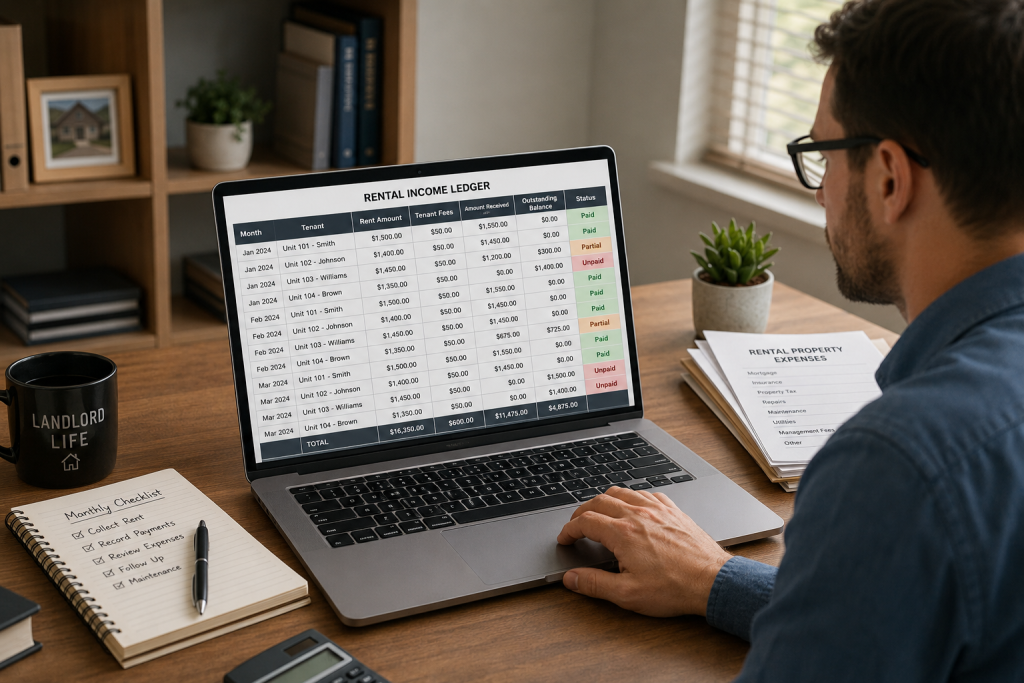
Do not record only the advertised monthly rent. Maintain a complete income record for rent and other applicable payments, such as certain fees or tenant-paid expenses. The IRS notes that rental income can include more than regular rent, so owners should understand what payments must be reported and when.
A simple rent ledger should show the property, tenant or unit, amount due, amount received, date received, and any outstanding balance.
3. Categorize Property Expenses Consistently
Create practical categories for repairs, maintenance, insurance, property taxes, utilities, management fees, advertising, professional services, mortgage interest, and other relevant costs. Consistent categories make it easier to compare one month with another and prepare information for a tax professional.
Keep improvements separate from routine repairs because they may receive different accounting and tax treatment.
4. Build a Realistic Rental Property Budget
A rental budget should reflect more than the mortgage and expected rent. Include recurring operating expenses, expected vacancy, maintenance, insurance, taxes, management costs, and planned capital expenditures.
A property can appear attractive on paper when every month is fully occupied, yet struggle when a tenant leaves or a major repair occurs. Building those possibilities into the budget creates a more realistic view of the investment.
5. Maintain a Cash Reserve
Rental properties eventually produce expenses that do not arrive on a predictable schedule. A water heater can fail, a roof can need work, or a vacancy can last longer than expected. A reserve helps you handle these events without immediately relying on credit or personal funds.
The appropriate reserve varies by property, age, condition, financing, insurance, and risk. Instead of copying another investor’s number, estimate the property’s likely major expenses and establish a reserve policy you can maintain.
6. Review Cash Flow Every Month
Monthly cash flow tells you how much money remains after the property’s regular cash expenses and financing obligations. Start with collected rental income, subtract operating costs, debt service, and other planned cash requirements, and then review what remains.
Do not confuse cash flow with accounting profit. Depreciation, principal payments, capital improvements, taxes, and other items can affect these measures differently. Looking at more than one metric gives you a clearer financial picture.
7. Measure the Property’s Profitability
Ask whether the property is performing as expected, not simply whether rent is being collected. Review income, operating expenses, net operating income, debt service, vacancy, and major repair costs over time.
A property may have stable rent while insurance, taxes, maintenance, or management costs rise enough to reduce returns. Regular financial analysis helps identify those changes before they become a larger problem.

8. Keep Complete Financial Records
Save receipts, invoices, bank statements, lease records, repair documentation, insurance information, and other supporting documents. Good records help owners monitor the property, prepare financial statements, work with accountants, and support tax filings.
The IRS specifically states that good rental records help identify receipts, track deductible expenses, prepare returns, and support items reported on tax returns.
9. Review and Reconcile Your Finances Regularly
Do not wait until tax season to discover that months of transactions were never categorized. Reconcile accounts regularly and investigate unusual charges, missing rent, duplicate payments, or unexpected expense increases.
A monthly review can include comparing the bank balance with your records, confirming rent received, checking outstanding bills, reviewing major expenses, and updating your budget.
10. Use Accounting Tools or Professional Support When Needed
A spreadsheet may be enough for a single property with straightforward finances and a manageable number of transactions. As the portfolio grows, accounting or property-management software can reduce manual work and provide clearer property-level reporting.
Professional help can also make sense when you have multiple properties, complex ownership structures, significant transactions, or limited time. A qualified accountant or tax professional can help with tax-specific questions, while a bookkeeper can help maintain organized records.
Take Control of Your Rental Property Finances with Dwanderful
Dwanderful is a real estate investing resource created by real estate investor and podcast host Dwan Bent-Twyford. Her platform provides educational resources for investors who want to build their knowledge and make more informed real estate decisions. Dwanderful’s official site highlights Dwan’s investing experience, podcast, educational resources, and real estate investing programs.
Investors can explore resources such as the free Real Estate Lingo guide and Five Pillars of Real Estate Investing for foundational knowledge. Dwanderful also offers resources focused on foreclosure investing, including Foreclosure Fortunes and its Complete Foreclosure Investors’ Choice Program, as well as programs covering distressed homeowners and creative real estate strategies.
For investors dealing with difficult property situations, How to Sell a House When It’s Worth Less Than the Mortgage discusses options including short sales and subject-to strategies. Short-Sale Pre-Foreclosure Investing covers opportunities involving short sales and pre-foreclosure properties.
If you are still deciding on your next investment move, Dwanderful also offers a free real estate investing quiz designed to help you explore potential investing directions. Visit Dwanderful.com to explore the resources and educational programs available. Contact us now!

Frequently Asked Questions About Rental Property Finances
What’s the Difference Between Cash Flow and Profit for a Rental Property?
Cash flow measures the cash left after relevant cash expenses and financing payments, while profit can reflect accounting and tax items that do not move cash in the same period. Reviewing both helps you understand day-to-day liquidity and overall financial performance.
Do I Need to Form an LLC to Manage My Rental Property Finances Properly?
Not necessarily. An LLC is a legal and business-structure decision, not a requirement for basic financial organization. Requirements and potential benefits vary by situation and state, so discuss entity structure with a qualified attorney or tax professional.
How Can I Tell if My Rental Property Is Actually Profitable?
Compare rental income with operating expenses and financing costs, then review measures such as cash flow and net operating income. Include realistic vacancy, maintenance, and reserve assumptions rather than judging performance from rent collected alone.
How Often Should I Review My Rental Property’s Financial Records?
A monthly review is a practical standard for many owners. Regular reviews help identify missed income, unusual expenses, overdue bills, and changes in profitability before they become larger problems.
Can I Manage My Rental Property Finances Without Hiring an Accountant?
Yes. Owners with a simple portfolio may be able to manage routine bookkeeping with a spreadsheet or accounting software. Professional assistance becomes more valuable when finances, taxes, ownership structures, or the number of properties become more complicated.

Editorial Review by Dwan,
Real Estate Investor & Podcast Host
Dwan is America’s Most Sought After Real Estate Investor™ and The Queen of Short Sales™. She went from a single mom with no resources to building a successful real estate business through wholesaling, rehabbing, rentals, and commercial properties. Today, she teaches investors how to succeed without costly mistakes through her books, podcast, and training programs.
Learn More